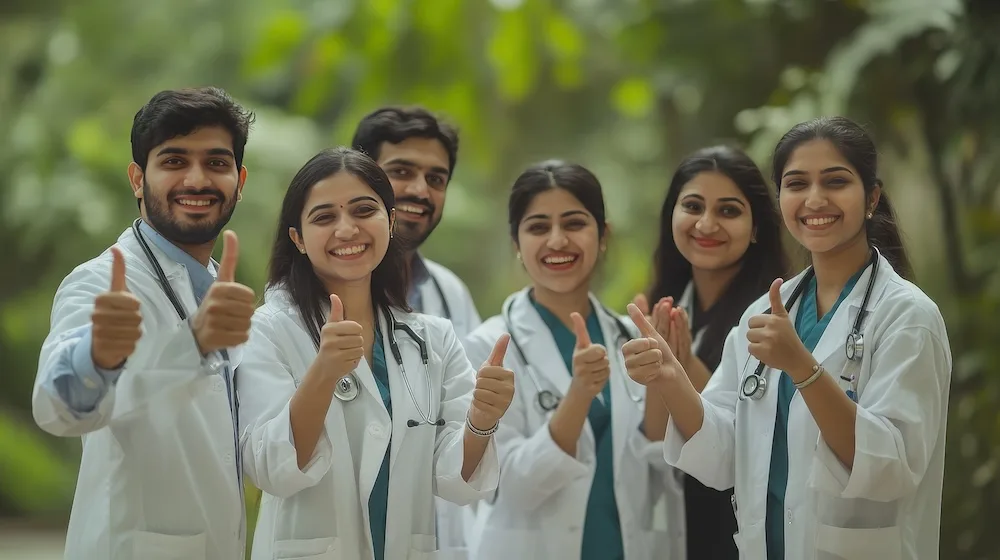

BAMS (BAMS)

Medicine courses train students to become professional healthcare providers, mostly doctors. These courses focus on human anatomy, physiology, pathology, pharmacology, and clinical skills. Medicine courses include top medical degrees, alongside paramedical and allied-health science courses.
These include MBBS, BAMS, BDS, BHMS, BPT, B Pharma, BSc Nursing, DMLT, MS, MD, and so on. The eligibility criteria and admission process for these Medicine courses differ based on course levels and colleges. Among hundreds of Medicine colleges in India, NEET, NEET PG, NEET SS, INI CET, KEAM, GATE, etc., are some important entrance exams.
Medicine Courses Details: Highlights
Medicine courses open doors to various career options, including hospital management, diagnostics, teaching, rehabilitation, pharma companies, and R&D. You can see the following table, highlighting key points of Medicine study in India.
|
Particulars |
Medicine Courses Details |
|
Medicine Course Level |
UG, PG, Diploma, and PhD |
|
Types of Medicine Courses |
Medical Degrees - MBBS, BAMS, BDS, BHMS, MD, MS, etc. Paramedical Degrees - BSc Nursing, B Pharma, BMLT, BOPTM, DNB, etc. |
|
Medicine Course Duration |
UG: 3 - 4 Years, PG: 2 Years, Diploma: 1 - 2 Years, Certificate: 3 - 6 Months |
|
Medicine Course Admission Criteria |
Merit and entrance exam-based |
|
Medicine Course Eligibility Criteria |
UG - 10+2 with PCB and English as core subjects. PG - MBBS from a recognized college Diploma - MBBS degree Certificate - Class 10th or 12th |
|
Medicine Course Entrance Exams |
NEET SS, NEET, INI CET, NEET PG, NEET MDS, KEAM, GATE, etc. |
|
Top Medicine Colleges |
Kokilaben Dhirubhai Ambani Hospital, Max Super Specialty Hospital, etc. |
|
Medicine Course Fees |
INR 1,000 - INR 1.95 Crore |
|
Medicine Job Profiles |
Doctor, Physician, Surgeon, Medical Researcher, Nurse, Dentist, Healthcare Consultant, etc. |
|
Top Medicine Recruiters |
AIIMS Delhi, Medanta, CMC Vellore, and Apollo Hospitals, |
|
Average Medicine Salary |
INR 8.3 LPA |
Syllabus of BAMS (Bachelor of Ayurvedic Medicine and Surgery)
BAMS (Bachelor of Ayurvedic Medicine and Surgery) is a professional undergraduate program that combines Ayurvedic medicine with modern medical sciences. The course covers the principles of Ayurveda, human anatomy and physiology, diagnosis, medicinal herbs, Panchakarma, surgery, obstetrics and gynaecology, and clinical practice.
The exact semester-wise syllabus can vary by university, but broadly it includes the following major subjects:
1. Padartha Vigyan and Ayurveda Itihasa
Introduces the fundamental concepts and history of Ayurveda.
- Basic principles of Ayurveda
- Philosophy and terminology
- Ayurveda's historical development
- Classical Ayurvedic texts
- Concepts of health and disease
2. Sanskrit and Samhita Studies
Students develop an understanding of important Ayurvedic texts and terminology.
- Ayurvedic Sanskrit
- Classical texts
- Important verses and concepts
- Interpretation of Samhitas
3. Kriya Sharira
Deals with physiology from both Ayurvedic and modern perspectives.
- Human physiology
- Dosha, Dhatu and Mala
- Agni and metabolism
- Body functions
- Ayurvedic concepts of normal physiology
4. Rachana Sharira
Focuses on anatomy and the structure of the human body.
- Gross anatomy
- Bones and muscles
- Organs and systems
- Embryology
- Ayurvedic anatomical concepts
- Dissection and practical learning
5. Dravyaguna Vigyana
Deals with medicinal plants and Ayurvedic drugs.
- Medicinal plants
- Identification of herbs
- Properties and actions of drugs
- Therapeutic uses
- Pharmacological concepts of Ayurvedic medicines
6. Rasashastra and Bhaishajya Kalpana
Focuses on the preparation of Ayurvedic medicines.
- Pharmaceutical principles
- Herbal preparations
- Mineral and metallic preparations
- Dosage forms
- Storage and quality considerations
7. Agada Tantra and Vidhi Vaidyaka
Covers toxicology and medico-legal aspects.
- Poisons and toxins
- Poisoning management
- Environmental toxins
- Forensic concepts
- Legal and ethical aspects of medical practice
8. Swasthavritta and Yoga
Focuses on maintaining health and preventing disease.
- Dinacharya
- Ritucharya
- Diet and lifestyle
- Public health
- Preventive healthcare
- Yoga and wellness
9. Roga Nidana and Vikriti Vigyana
Deals with the diagnosis and understanding of diseases.
- Ayurvedic methods of diagnosis
- Signs and symptoms
- Disease classification
- Pathogenesis
- Clinical examination
- Laboratory investigations
10. Charaka Samhita
Students study important concepts of Kayachikitsa (internal medicine) through classical Ayurvedic literature.
- Fundamental principles of treatment
- Diagnosis
- Therapeutic approaches
- Diet and lifestyle
- Classical Ayurvedic concepts
11. Kayachikitsa
This is the major clinical branch dealing with internal medicine.
- General medicine
- Common diseases
- Ayurvedic diagnosis
- Treatment principles
- Panchakarma-related approaches
- Clinical case management
12. Shalya Tantra
Focuses on Ayurvedic surgery and surgical principles.
- Basic surgical concepts
- Wound management
- Surgical instruments
- Kshara and related procedures
- Post-operative care
- Principles of modern surgery
13. Shalakya Tantra
Deals with diseases of the eye, ear, nose, throat, and related structures.
- Ophthalmic conditions
- ENT conditions
- Oral diseases
- Diagnosis
- Preventive and therapeutic approaches
14. Prasuti Tantra and Stri Roga
Focuses on obstetrics and gynaecology.
- Pregnancy care
- Antenatal and postnatal care
- Labour
- Gynaecological disorders
- Women's reproductive health
- Ayurvedic approaches to maternal care
15. Kaumarbhritya
This branch focuses on paediatric healthcare.
- Child growth and development
- Nutrition
- Childhood diseases
- Preventive healthcare
- Neonatal and paediatric care
16. Panchakarma
Students learn about classical Ayurvedic purification and therapeutic procedures.
- Principles of Panchakarma
- Preparatory procedures
- Therapeutic procedures
- Post-procedure care
- Clinical applications
17. Research Methodology and Medical Statistics
Modern BAMS programs also include research-oriented learning.
- Research methods
- Study design
- Data collection
- Basic statistics
- Evidence-based healthcare
- Academic research
18. Clinical Training and Internship
Practical clinical training is an important component of BAMS.
- Patient history and examination
- Ayurvedic diagnosis
- Case documentation
- Clinical procedures
- Hospital/clinic postings
- Exposure to different Ayurvedic departments
- Internship-based practical experience
Broad Structure of BAMS
Ayurvedic Fundamentals → Anatomy & Physiology → Ayurvedic Pharmacology & Pharmacy → Disease Diagnosis → Clinical Subjects → Panchakarma & Specialities → Clinical Training & Internship
Overall, BAMS provides education in Ayurvedic principles, medicinal plants and formulations, anatomy, physiology, pathology, diagnosis, internal medicine, surgery, Panchakarma, paediatrics, obstetrics and gynaecology, ENT/ophthalmology, preventive healthcare, and clinical practice.
BAMS Fees – Discuss in Broad
The fees for BAMS (Bachelor of Ayurvedic Medicine and Surgery) vary depending on the type of college, state, university, and admission category.
1. Government BAMS Colleges
-
Approx. ₹20,000 – ₹1,00,000 per year
-
Total tuition fees for the course may be around ₹1 – ₹5 lakh
2. Private BAMS Colleges
-
Approx. ₹1.5 – ₹4 lakh per year
-
Total tuition fees may be around ₹7 – ₹18 lakh
3. Deemed/Premium Private Universities
-
Approx. ₹3 – ₹6 lakh+ per year
-
Total course fees can reach ₹15 – ₹25 lakh+
4. Other Expenses
Students may also need to budget for:
-
Hostel and accommodation
-
Food and mess charges
-
Examination fees
-
Books and study materials
-
Uniform and other college charges
-
Clinical/practical expenses
5. Scholarships and Financial Aid
Eligible students may receive government scholarships, state-level scholarships, or institution-based financial assistance, depending on the applicable rules.
Overall: BAMS fees can broadly range from around ₹1 lakh to ₹25 lakh+ for the complete course, depending mainly on the college and admission category. Exact fees vary considerably, so the specific college's current fee structure should be checked before admission.
After completing BAMS (Bachelor of Ayurvedic Medicine and Surgery), graduates can explore careers in healthcare, Ayurveda, research, education, wellness, and the pharmaceutical industry. Career options include:
1. Ayurvedic Physician
Work in Ayurvedic hospitals, clinics, wellness centres, and healthcare organisations, providing care based on Ayurvedic practices.
2. Ayurvedic Medical Officer
Work in government hospitals, dispensaries, and AYUSH-related healthcare services. Recruitment depends on the applicable government rules and registration requirements.
3. Government Jobs
BAMS graduates can apply for suitable positions in:
- AYUSH departments
- Government hospitals and dispensaries
- Public health programmes
- State health departments
- Other government healthcare services
4. Private Hospitals and Clinics
Graduates can work as Ayurvedic doctors or healthcare professionals in private Ayurvedic hospitals, clinics, and integrated healthcare centres.
5. Ayurvedic Consultant
Provide professional Ayurvedic consultation in clinics, wellness centres, hospitals, and other healthcare settings, subject to applicable registration and professional rules.
6. Panchakarma and Wellness Centres
BAMS graduates can work in Ayurveda wellness and Panchakarma centres in appropriate clinical or supervisory roles, depending on their qualifications and training.
7. Ayurvedic Pharmaceutical Industry
Career opportunities are available with companies involved in:
- Ayurvedic medicines
- Herbal products
- Quality control
- Product development
- Medical information
- Research and development
8. Research
Graduates can pursue opportunities in Ayurvedic and healthcare research, clinical studies, medicinal plants, pharmacology, and related fields. Advanced qualifications can expand research opportunities.
9. Teaching and Academics
After obtaining the required postgraduate qualifications, BAMS graduates can build careers in Ayurvedic colleges and educational institutions as teachers, lecturers, or academic professionals.
10. Public Health and Healthcare Programs
BAMS graduates may work in public-health initiatives, community healthcare, preventive healthcare, and AYUSH programmes.
11. Own Ayurvedic Practice
After fulfilling the applicable registration and legal requirements, graduates may establish their own Ayurvedic clinic or healthcare practice.
12. Higher Education and Specialisation
BAMS graduates can pursue further studies such as:
- MD/MS in Ayurveda
- Public Health-related programmes
- Healthcare Management
- Research-oriented postgraduate programmes
Career Growth
A BAMS graduate can begin in clinical or healthcare roles and, with experience, registration, postgraduate education, and specialised training, progress toward senior clinical, academic, research, administrative, or entrepreneurial positions.
FAQ's
Are you interested in this Course?
Top Colleges
Arkay College of Engineering and Technology
Nizamabad, Telangana
East Point College of Medical Sciences and Research Center, Bangalore
Bengaluru, Karnataka
Jamia Millia Islamia New Delhi
New Delhi, Delhi
Dwarka Dass Memorial Sai Law College, Hamirpur
Hamirpur, Himachal Pradesh
JIST Jorhat
Jorhat, Assam